
Cambrai



Soldat Josef Himmelreich
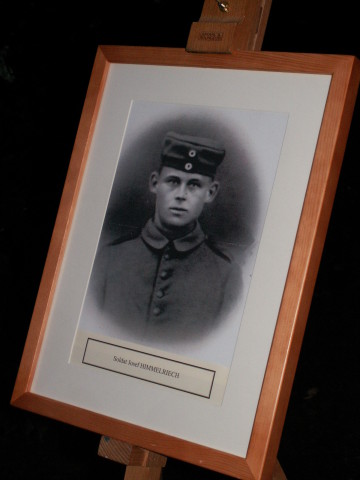
Josef Himmelreich had been born on the 1st October 1896 at Westfeld in Westphalia and later been conscripted into the 10th Company of the 88th Reserve Regiment of Infantry.
During the German counter offensives during the Battle of Cambrai his Regiment were part of the 21st Reserve Division.
On the 25th November 1917 and hardly passed his 21st birthday he was killed near Bourlon Wood during one of those attacks. Ninety years later, almost to the hour, his body was finally on its way to its burial place.
For decades he had been one of the missing until in 2006 workers came across a skeleton whilst working in Bourlon. A few buttons and a ring were all that was left to identify the body as being of a German and part of the ID Tag showed the number 854. This was enough to help formally identify the body as being Joseph Himmelreich.
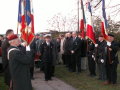
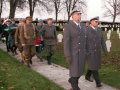
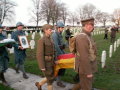
Following a service in Bourlon Chapel in remembrance for those who had fallen during the battle a cortège bore the small coffin to the German Military Cemetery in Cambrai - which includes the CWGC Cambrai East Cemetery.
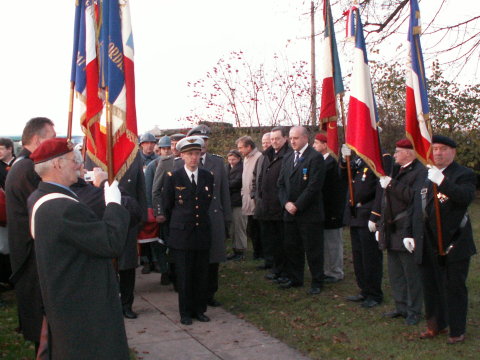
Eleven members of his family, making up three generations, attended alongside members of the German Army. The coffin was carried and escorted by members of an association in period uniforms.
The short ceremony was conducted by a Chaplain from 103rd Airforce base (Which by chance overlooks Bourlon).
The evening was turning cold but about a hundred and fifty people from all nationalities gathered to pay their respects. The location was a little cramped as the wall of the British plot in the top corner was alongside the chosen grave location, but people gathered where they could: no longer allies and enemies.
As the representative for the German Graves Association stated: For more than 60 years we have lived in peace and liberty. Learning lessons from the past allows us to construct a better future.
Click on the thumbnail, it may take a moment for the photo to load
 Cambrai East Cemetery
The Monument to the Nations
Cambrai Parade
Cambrai East Cemetery
The Monument to the Nations
Cambrai Parade